
Product Details
Overview
This product is a high-end UAV flight simulation training system for professional training organizations, industry application units and universities. It addresses industry pain points in UAV operator training such as "poor training equipment adaptability, low simulation fidelity and scattered teaching resources". Built around a high-precision flight dynamics model and a 3D simulation engine, it strictly follows real flight principles and industry operating standards to deliver an immersive training platform covering the full skill development cycle.
Core Functions
- High-fidelity flight control simulation for multiple airframe types
- In-depth simulation of industry-level mission workflows
- Emergency handling and contingency training
- Instructor control and teaching management
- Multi-vehicle coordination and formation training
Product Forms
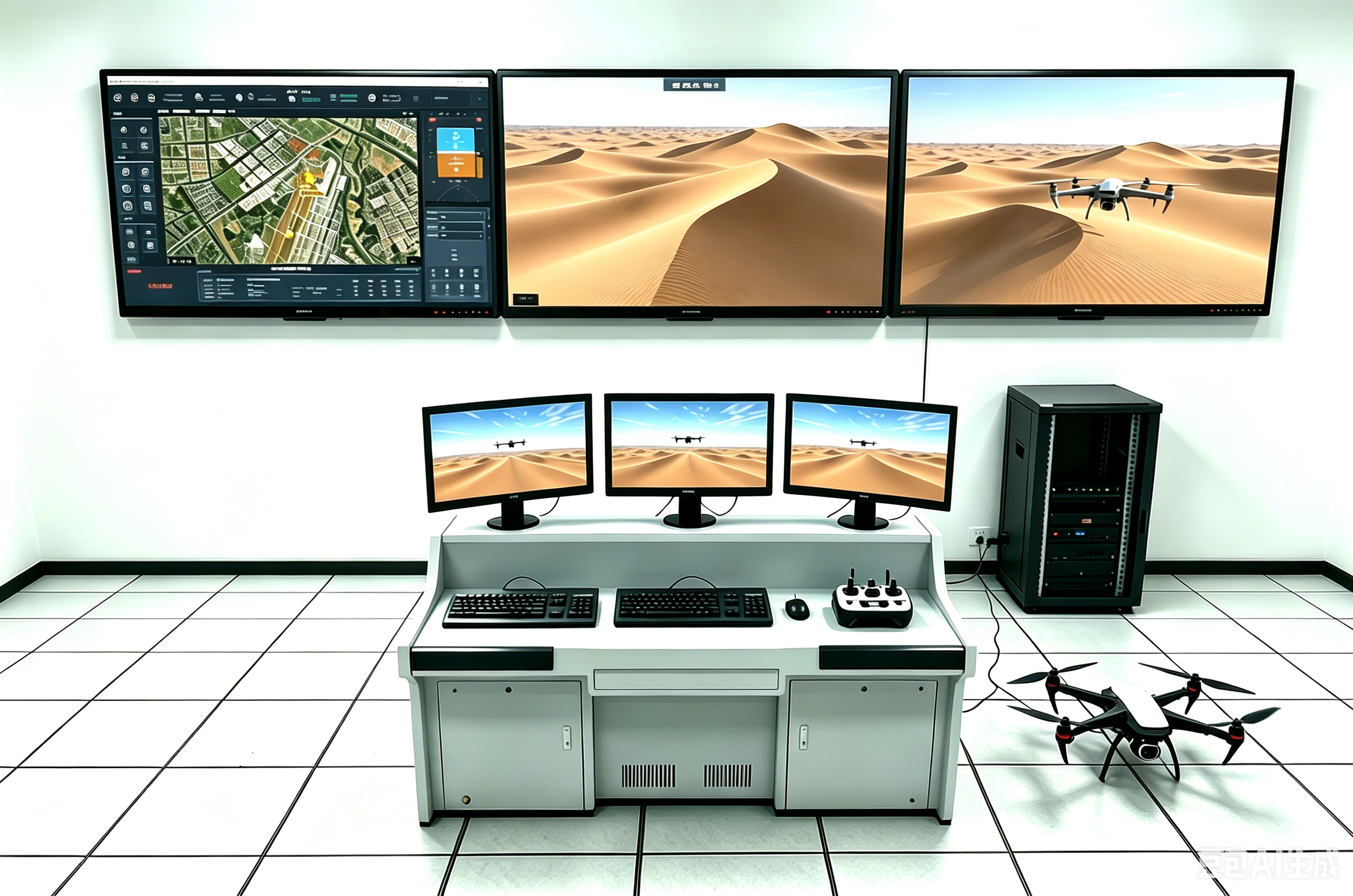
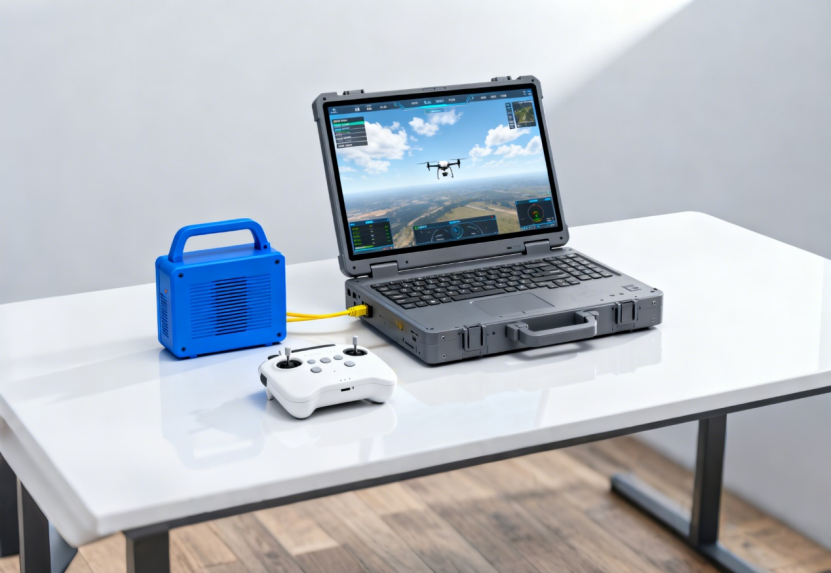
The product comes in two forms, base-level and portable, with identical core functions; different peripherals are configured to meet the needs of different scenarios.
| Feature | Base-Level | Portable |
|---|---|---|
| Installation | Fixed installation | Flexible deployment, train anytime |
| Display Setup | 3 large screens + 3 small screens, showing situation / visuals / payload separately | All-in-one mobile workstation display |
| Operator Seats | 3-seat console | Portable operation |
| Applicable Scenario | Fixed training centers and bases | Field training |
Technical Features
1. High-Fidelity Flight Dynamics Model
Based on an accurate aerodynamic model and the physical characteristics of the UAV, the system realistically simulates flight attitude changes. An optional six-degree-of-freedom (6DOF) motion platform dynamically feeds back attitude changes and wind disturbance impacts, strengthening the operator's spatial awareness and control instincts.
2. Immersive Visual System
Developed with Unreal Engine (UE5) to create a realistic 3D flight environment. It supports ocean, ship, urban, mountain and other real terrains as well as industrial scenarios. An ultra-wide curved screen or VR headset is optional for an immersive visual experience.
3. All-Terrain, All-Weather Simulation
The system supports simulation training for multiple UAV types under all-weather and all-terrain conditions, with dynamic overlay and adjustment of weather conditions (wind speed, wind direction, visibility, precipitation, etc.).
4. Hardware-in-the-Loop (HIL) and Software-in-the-Loop (SITL) Dual-Mode Support
The system supports both software-in-the-loop and hardware-in-the-loop simulation modes. Simulation parameters can be synced to the real aircraft with one click, forming a complete "simulate — tune — fly — review" loop that reduces wear and safety risks in real flight testing while seamlessly transferring training results to real operations.
5. Modular Open Architecture
The system uses an open software architecture that is easy to port and adapt, and can quickly adapt to a variety of unmanned equipment. It supports modular expansion and can be flexibly combined with VR/AR devices, 6DOF motion platforms and more. An open SDK is provided, compatible with mainstream development tools.
6. Domestic and Autonomous Control
The core hardware and software of the system are domestically developed and controllable — the hardware uses simplified circuit design and upgraded domestic main control chips, significantly reducing cost while improving sampling accuracy; the software is built around a domestic real-time operating system, integrating positioning, control and other functional modules.